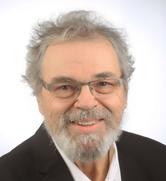
Studying with determination – and influenced by Bayreuth
From 2006 to 2011, Müller studied health economics – as one of the first bachelor's and master's students after the changeover from the Diplom degree. He gained practical experience during his bachelor's degree through an internship and later worked as a junior consultant at Porsche Consulting in the healthcare sector while studying for his master's degree. ‘I was only really in Bayreuth permanently during the first four semesters,’ he says. ‘During my master's degree, I only came back for the exams.’ Nevertheless, his time in Bayreuth shaped him both professionally and personally.
In particular, the solid knowledge base he gained in Bayreuth made it easier for him to start his career: ‘The functional and regulatory fundamentals of healthcare, the billing logic, the operational and economic aspects – that was a real asset. Bayreuth imparts an exceptionally high level of quantitative core competence.’
After completing his master's degree, he continued to build on the foundation he had laid during his studies at Porsche Consulting. This was followed by further positions in the healthcare industry and several start-ups in various sectors. Since November 1, 2025, Müller has been managing director of Thieme RECOM, a wholly owned subsidiary of the Thieme Group based in Kassel. The company employs around 40 people and is heading for annual sales of around ten million euros. RECOM works in two key areas: care classification and terminology, which standardizes care processes and serves as the basis for quality indicators and personnel requirement calculations (PpUG/PPR); and a software solution that integrates this terminology into the everyday work of care facilities in Germany, Austria, Switzerland, and Luxembourg. In addition, RECOM licenses the terminology to third-party providers, AI systems, and software manufacturers in Germany and abroad.
How AI is changing healthcare
By joining the management team, Müller is taking on responsibility in a rapidly evolving field. Artificial intelligence plays a central role in this. “The question is: How does AI change processes? How does it change the interaction between humans and machines? How can AI help to alleviate the shortage of skilled workers and reduce the workload?” It is important to him that AI users are empowered without causing fear. That is why AI must not become a medical device that functions without human control. Humans remain responsible – the human in the loop. Nursing staff must confirm the AI's suggestions, also with regard to liability issues.
At the same time, Müller sees enormous potential. Studies show that speaking is seven times faster than typing. Documentation currently takes up a large part of working hours. “We used to do value stream analyses. The value added by a caregiver is often only 15 percent. The rest is necessary but does not add value.”
This is exactly where RECOM comes in: reducing bureaucracy, intelligent documentation, better predictions, more efficient processes. “If we manage to free nursing staff from the burden of documentation, we gain time for what is essential: working with people,” says Müller.
Looking ahead – and back to Bayreuth
The network he built up during his studies continues to this day. “We were a close-knit group back then, living together in shared apartments. Many of these contacts still exist today – and you keep meeting people from Bayreuth in the industry. That creates an instant bond.” He has never lost sight of Bayreuth: "It would be nice if the alumni network became even stronger. Despite LinkedIn, it's easy to lose touch."
For the university, Müller's path shows how diverse careers in health economics can be – and how lasting the impact of a Bayreuth education is on society.