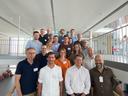
In addition to seven distinguished economists from the United States, six economists from elsewhere in Europe and from Germany presented their latest research on key topics in international trade economics. While the presentations covered a wide range of subjects, this year’s workshop placed particular emphasis on uncertainty in international trade relations, access to new technologies—especially artificial intelligence—and the effects of political interventions.
Two early-career researchers from the University of Bayreuth, Tim Lüdiger and Leandro Navarro, also had the opportunity to present their current research findings and receive valuable feedback for future projects. Furthermore, this year’s TRISTAN workshop gave other members of the University of Bayreuth the chance to experience lively academic discussions first-hand, engage with the visiting researchers, and exchange ideas about their own research.
The organisers also used the workshop as an opportunity to showcase both the University and the city of Bayreuth. In her welcoming remarks, Professor Nina Nestler, Vice President for Internationalisation, Equal Opportunities and Diversity, highlighted the significance of the TRISTAN workshop for both the Faculty and the University as a whole. As part of the social programme, participants were invited to spend an evening at Villa Wahnfried. During a one-hour concert, the internationally renowned pianist Professor Michael Wessel introduced the audience to the work of Richard Wagner, demonstrating the creative genius and virtuosity of one of the most important composers in music history. The dinner that followed provided guests with an opportunity to engage in conversation with the artist and fellow workshop participants. On the second evening of the workshop, a guided tour of Bayreuth’s historic town centre offered guests insights into the major contribution of the Margraves of Bayreuth—and in particular Margravine Wilhelmine—to the city’s cultural heritage.
The very positive experiences of recent years, the value the workshop brings to the reputation of Bayreuth as a research location and to the development of its early-career researchers, as well as the support provided by the University leadership and the staff of the participating chairs, have motivated Professors Egger and Larch to organise a sixth TRISTAN workshop in 2028. Planning and fundraising activities will begin in the near future.