The planned measures focus on ensuring the garden in Bayreuth’s ‘Grüner Süden’ is accessible to people of all ages. The aim is to make the ÖBG even more attractive and easier to use for people of all ages, as well as for those with varying mobility needs.
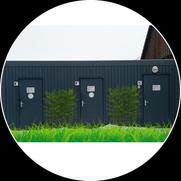
One of the most important steps in the project is the construction of accessible toilet facilities in the inner part of the garden. These are intended to benefit, in particular, visitors attending events, as well as school groups and other groups taking part in environmental education programmes at the Zedernhaus. This will significantly reduce the distance visitors have to walk to reach the toilet facilities.
Another project involves the development of digital, three-dimensional models of various plants in the High Mountain House. These models are intended to vividly depict the plants on display there and create new opportunities for knowledge transfer. At present, the plants can only be viewed through a pane of glass. The 3D models will allow the plants to be examined in greater detail without having to set foot on the delicate terrain. The project is being carried out in collaboration with the Centre for Higher Education Teaching (ZHL).
Two accessible raised beds are also planned as part of the inclusive educational programme. These are intended to enable people with different physical abilities to take an active part in gardening projects and to further strengthen the garden’s role as a place of learning for everyone.
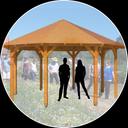
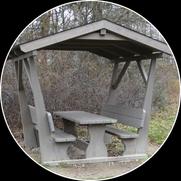
There are plans to build a large pavilion in the kitchen garden. Its main purpose is to provide shade for larger groups – particularly children and older people – on hot summer days. The project will be complemented by three covered seating areas. Two of these will be funded by the grant that has now been approved. A further seating area will be built by the City Parks Department on municipal land at the southern edge of the ÖBG.
One of the new seating areas will be created at the south entrance, near the observatory run by the Department of Physics at the University of Bayreuth. In addition, a new information pillar is planned for this location, which will in future provide visitors with details of the garden’s attractions and special features.
The ÖBG’s public education work also benefits from the funding, as new stereo microscopes have already been purchased for educational projects. In addition, sturdy, portable stools are to be purchased which can be taken along on guided tours so that people who have difficulty walking can rest from time to time. Furthermore, an interactive information and learning station for children is planned.
“We are delighted that things are now getting underway and that we can move on to implementing the plans. The accessibility of this biodiverse and natural garden for people of all ages is particularly important to us. It’s wonderful that we can now implement the various parts of the project step by step,” says garden director Dr Lena Muffler-Weigel.
The planned measures, together with the financial support from the estate and the Upper Franconia Foundation, will strengthen the role of the Ecological and Botanical Garden as a place of education, recreation and social interaction at the University of Bayreuth for the city and the entire region.