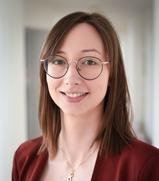
Digitalisation is ubiquitous in everyday life, including in medicine. Artificial intelligence is employed to help analyse medical imaging, develop personalised treatments based on large datasets, and predict individual health risks. All of this requires adaptive algorithms, which are at the heart of Prof. Dr.-Ing. Heike Leutheuser's research. Her work focuses on machine learning, wearable health monitoring, and the analysis of medical time-series data. Current research projects include assessing the healing process of chronic wounds using associated image and sensor data, as well as improving diabetes management to prevent hypoglycaemia.
Leutheuser earned her doctorate in computer science, completing a research stay at Stanford University. Following her doctorate at the Friedrich-Alexander University (FAU) Erlangen-Nuremberg, she served as scientific director at the Central Institute of Medical Engineering (ZiMT) at FAU before moving to a postdoctoral position at ETH Zurich. There, she worked at the Institute for Machine Learning in the Medical Data Science Group, using data from children with Type 1 diabetes to predict the likelihood of nocturnal hypoglycaemia. Most recently, she was the head of the Digital Health - Biosignals Group in FAU’s Machine Learning and Data Analytics (MaD) Lab, where she focused on digitalising and enhancing prenatal care.
In Bayreuth, Leutheuser looks forward to interdisciplinary collaboration on campus. “I want to integrate the interdisciplinary approach into my research and expand my research group accordingly. Additionally, I aim to bring this interdisciplinarity into my teaching, incorporating current research aspects,” she says.