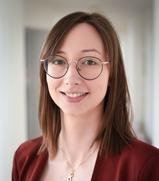
Prof. Dr. Mukundan Thelakkat

WISE is the largest-ever investment in materials science in Sweden, funded by the Knut and Alice Wallenberg Foundation. The programme aims to lay the foundations for a sustainable society by researching environmentally friendly materials and manufacturing processes. To this end, WISE supports the recruitment of international research teams and the establishment of a graduate school. A visiting professorship programme is also part of the initiative, and Professor Dr. Mukundan Thelakkat, Applied Functional Polymers at the University of Bayreuth, has now been included in it. He was nominated for the programme by Professor Dr. Christian Müller from the Department of Applied Chemistry at Chalmers University of Technology (Gothenburg, Sweden).

From October 2025, Thelakkat will spend around two to three months per year teaching and researching in Gothenburg and at other Swedish universities. The visiting professorship is initially planned for two years.

Thelakkat’s research focuses on the design and synthesis of semiconductor polymers, charge separation and transport, as well as the fabrication and characterisation of various devices such as solar cells, thermoelectric generators, and biosensors. “Chalmers University of Technology has a strong faculty in materials research. During my visiting professorship, I aim to explore and further develop polymer and hybrid thermoelectrics using sustainable and carbon-rich materials, in collaboration with colleagues from the Department of Materials Science, some of whom I already know through our research on related topics in thermoelectrics and bioelectronics,” says Thelakkat. Hybrid thermoelectrics involve converting waste heat into electricity. In addition, he is eager to explore new approaches in Gothenburg, such as using paper instead of glass as a functional substrate for devices. “Typically, components like solar cells, thermoelectric generators, or biosensors are manufactured on rigid glass substrates. However, some unconventional applications—such as those on textiles or curved surfaces—require conductive or transparent flexible substrates. Swedish research centres have the expertise to provide paper-based substrates for such applications, opening up entirely new research possibilities for me,” Thelakkat explains.

About Professor Dr. Mukundan Thelakkat

After studying chemistry at Calicut University, Kerala, India, and working as a lecturer in chemistry at various colleges affiliated with Calicut University, he completed his doctorate in 1992 during a research stay in Germany at the Institute of Organic and Macromolecular Chemistry at Friedrich Schiller University Jena. He then took up a postdoctoral position at BASF in Ludwigshafen. In 1995, he joined the Bayreuth Institute for Macromolecular Research at the University of Bayreuth as a visiting scientist. Later that same year, he became a research associate at the Chair of Macromolecular Chemistry I, where he completed his habilitation in 2004. Since 2006, he has been a professor of Applied Functional Polymers at the University of Bayreuth.

Links:
www.chemie.uni-bayreuth.de/afupo/
http://www.afupo.de/

Foto

Theresa HübnerDep. PR Spokesperson

University of Bayreuth
Phone: +49 (0) 921 / 55 - 5357
Mail: theresa.huebner@uni-bayreuth.de

Webmaster: Team UBTaktuell