
Interview with Prof. Dr. Maximilian Röglinger
In the interview, Prof. Röglinger talks about the effects of digitalisation and how he intends to use the FIM degree programme to prepare students for their future tasks.
Digitisation has been an important topic in our everyday lives, in business, and in research for quite some time. But driven by new technologies, new infrastructures and last but not least by the pandemic, we are experiencing an unprecedented wave of digitalisation, which is further increasing the output of digital innovation in business and society.
Prof. Dr. Maximilian Röglinger is Chair of
Business & Information Systems Engineering and Value-Based Business Process
Management at the University of Bayreuth, is Deputy Head of the Core Competence
Centre Finance & Information Management and of the Business & Information
Systems Engineering Project Group at Fraunhofer FIT.
Together with colleagues at the Technical University of Munich, Prof. Röglinger is currently designing the new Finance & Information Management (FIM) master's programme at the University of Bayreuth. The predecessor of this degree programme has had a long track record of success. Five times in a row, it achieved the nationwide top ranking in the CHE Ranking for master's programmes in business administration - most recently in the current 2020/21 CHE Ranking. Many former students of the programme are already managers in German business today. These include Bastian Nominacher, one of the founders of the Unicorn start-up Celonis, and Ana Maria Balan, Head of Strategy Development at Infineon Technologies AG, who was hailed a prophet by Handelsblatt for her leadership during the coronavirus crisis. The new degree programme continues this tradition and is aimed at ambitious students who wish to pursue exceptional career paths in business and research in the age of digitalisation.
Prof. Röglinger, how is digitalisation changing our society?
This comes as no surprise to anyone today. The impact of digitalisation has been and continues to be enormous, affecting individuals, businesses, and society as a whole. The rapid spread of digital technologies is not only changing how people interact with each other, but also their behaviour as consumers, professionals, and individuals.
What does this mean for companies?
Every organisation must - whether it wants to or not - drive its own digital transformation. Otherwise, it will soon disappear from the market. This applies in particular to established companies whose business models have so far managed without digital structures, and which are therefore having a hard time with the digitalisation process. But digitalisation is really upsetting the established business rules of the physical world - we all know the examples of Netflix, Amazon, AirBnB, and Uber, which have shaken up their respective industries - so established companies in particular have a great need for transformation. But this requires employees who can "think digitally", who have a digital mindset.
What does this mean for the leaders of the future?
Companies need leaders who exemplify this innovative mindset and who can break new ground. So, in addition to a profound analytical and technical understanding, creativity, flexibility, critical thinking, and proactive collaboration are also required today, to drive the digital transformation in companies as a manager. This is exactly what you learn in the Finance & Information Management master's programme, or FIM for short. You develop an understanding of topics at the interface of business administration, computer science, mathematics, and digitalisation.
How will this enhance their future career opportunities?
As I said, today it is no longer just a matter of specific professional qualifications. Interdisciplinarity and interpersonal skills are also required to be successful in demanding leadership positions. In my view, the FIM master's programme offers a perfect approach to deepen precisely this triad of professionalism, interdisciplinarity, and soft skills. The programme combines technical skills such as programming, statistics, and econometrics with theoretical and practical knowledge of finance, business information technology, and management. In addition, students have exclusive and numerous opportunities to gain practical experience. Together with many great companies, we offer exciting events at which students can exchange ideas very openly with experienced mentors from companies and academia. This enables our students, who have often completed their bachelor's degree in business administration or computer science, to individualize and expand their personal profile. At the end of the master's programme, FIM graduates are equipped with the know-how and soft skills to manage digital transformation and continuously respond to changes and challenges in the financial and business world.
What is your personal highlight of the FIM programme?
What I particularly like about the FIM programme is the small cohorts, which allow for close relationships between students, lecturers, and companies - we call this the FIMily. The new FIM programme is the continuation of an already very successful concept, and I am very proud to be able to accompany many FIM students on their way.
How would you summarise the advantages of FIM?
FIM combines a high scientific standard with a strong industrial orientation. Students already learn the practical implications of what they have learned during their studies. This means that FIM students are extremely well prepared and can choose from a wide range of career opportunities when they start their careers. Digitalisation affects all sectors without exception. It is also remarkable that many very renowned companies support the FIM programme and are eager to network with our students right from the start. It is also not uncommon for students to become entrepreneurs themselves, immediately after completing their master's degree, or to pursue an academic career with a doctorate. When I think back to the first cohorts of the FIM programme, i.e. about 15 years ago, quite a few alumni are already board members, hold professorships, or have become partners in management consultancies.
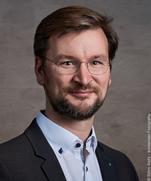
Prof. Dr. Maximilian RöglingerWirtschaftsinformatik und Wertorientiertes Prozessmanagement
Wittelsbacherring 10
D-95447 Bayreuth, Deutschland
Tel.: +49 (0)921 / 55-4710
Fax: +49 (0)921 / 55-844710
E-Mail: wpm@uni-bayreuth.de