
A recycling table in the Audimax
A student at the University of Bayreuth made a table for the university's largest lecture hall out of old flower pots.
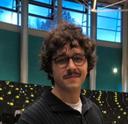
Jannik Hereth is actually in his 5th semester of Engineering Science (Bachelor) at the University of Bayreuth. However, the young man is interested in many other things besides his studies. For example, he is involved in the Bayreuth regional group of "Technology without Borders". Together with Central Technology and with the help of GreenCampus, he has now installed a table in the Audimax.
This table is no ordinary one, because it is made of rubbish. More precisely, from old flower pots. "I chose them because there are so many of them and because they can be cut to size," says Hereth. "Moreover, unlike yoghurt pots, for example, they are not further coated."
The polypropylene that Hereth processes did not make it onto the student's list of materials without reason. "I just like to tinker, but preferably with rubbish," he says with a laugh, explaining that he worked on a plastic recycling project during a stay abroad in Sierra Leone. "Since then, my eye has been much sharper for waste and its consequences."
Only ten percent of the waste in the yellow bag can be used for such recycling projects.
After the idea was born, Jannik Hereth contacted Greencampus. There, Max von Estorff took on the project and took on many organisational tasks. For example, he brought Central Technology and Jannik Hereth together. "Questions about the choice of site were then discussed and also various safety aspects and DIN standards," explains von Estorff.
But then everything went quite quickly. The new tabletop has been in place in the Audimax for about a month. "I had first thought of an auditorium in one of the FAN buildings," Hereth tells us. "But I think the audience is much more mixed in the Audimax. So with this we create attention among many different fields of study." The current plan is for the tabletop to remain in the Audimax for a semester as a test. A QR code is stuck on the table. Students can use it to give feedback on what they think of the table.
However, there will be no mass production of the recycled tables for the time being. "It took me about three hours to produce them," says Hereth. "It's all handmade and is simply meant to draw attention to the issue of sustainability."
And speaking of sustainability: the dismantled table has not been disposed of, of course, but is ready for use in another place - should a table break somewhere.

Jennifer OpelDeputy Press Officer
University of Bayreuth
Phone: +49 (0)921 - 55 5893 57
Mail: jennifer.opel@uni-bayreuth.de