
Humboldt Foundation network meeting in Bayreuth
From November 12 to 14, the University of Bayreuth hosted the Alexander von Humboldt Foundation's network meeting, making it the venue for this international scientific gathering. More than two hundred Humboldt Fellows from all over the world came together to present their research, establish contacts, and get to know the University of Bayreuth as a research location.
On Wednesday, 12 November, Stefan Leible, President of the University of Bayreuth, and Markus Zanner, Secretary General of the Humboldt Foundation and an old acquaintance at the University of Bayreuth – he was the predecessor of Dr. Nicole Kaiser as Chancellor – opened the conference. The opening lecture was given by Gilbert Shang Ndi, Professor of Comparative Literature and Cultural Studies with a focus on Africa and Latin America. Under the title "A piece of Africa: Self-writing and remembering in Afro-Latino diasporas," he spoke about cultures of memory and self-writing in Afro-Latin American diasporas. This introduction demonstrated Bayreuth's international orientation. Bayreuth is internationally renowned for its outstanding research on Africa, particularly through the Africa Multiple Cluster of Excellence. The lively discussion that followed the opening lecture underlined this once again. Shang Ndi comes from Cameroon, where he studied Bilingual Letters and Commonwealth Literature, and came to the University of Bayreuth in 2010 to do his doctorate. From 2017 to 2019, he conducted research in Bogotá, Colombia, as a Feodor Lynen Fellow of the Humboldt Foundation. After his return, he habilitated in Bayreuth and temporarily headed the Chair of Romance Languages and Comparative Literature. As part of a DFG-funded Heisenberg professorship, he is now establishing research projects on networks of tropical coloniality in African and Latin American literature.
Experience research up close
Thursday, 13 November, was all about exchange: the fellows visited research institutes at the University of Bayreuth, gained insights into current projects, and discussed topics in specialist groups. The afternoon was particularly lively: from 3 p.m. onwards, the fellows presented their main areas of research in a poster session in the TAO building.
Ana Pantazica from Romania, for example, presents her research at the Max Planck Institute of Molecular Plant Physiology in Potsdam. "I am researching a vaccine that is taken orally," she explains. Her aim is to make it possible to take a flu vaccination every few years in tablet form, rather than having to have an injection every year. She has been a Humboldt Fellow since 1 September 2026. "This is my first time in Bayreuth. I really like the Ecological-Botanical Garden. I can well imagine coming back."
Just a few steps away, Thomas Laville stands in front of his poster. He is at the Faculty of Biology at Ludwig Maximilian University in Munich. As a postdoc, he is working there on research into the evolution of Pancrustacea. This is a group of arthropods. "I have a lot of good material to work with," says the Frenchman. "But I don't just work directly with the fossils, I also use modern imaging techniques, such as CT." This is his first visit to Bayreuth, even though Munich is not far away. He will continue to work in Munich for another year as a Humboldt Fellow.

This is my first time in Bayreuth. I really like the Ecological-Botanical Garden. I can well imagine coming back again.
Ana Pantazica
I was in Bayreuth city centre. It's a really nice city.
Roemer Hinlopen
Erina Dawson does not have a poster at the session herself, but she is gathering detailed information about the research of others. "I have only been a Humboldt Fellow and at the University of Tübingen since 1 October," she says. "I haven't seen much of Bayreuth yet, but yesterday evening we went to the Orangery at the Hermitage. It's a wonderful atmosphere." Dawson comes from the USA and conducts research in the field of tropical geometry.
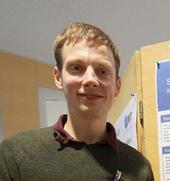
Superconductors are the materials that Roemer Hinlopen works with. As a Humboldt Fellow, he is at the Max Planck Institute for the Structure and Dynamics of Matter in Hamburg. He has also noted a fun fact on his poster: five Nobel Prizes have already been awarded in the field of superconductors. Although a lot of research has already been done in this area, there is still much to be done. This is the Dutchman's first time in Bayreuth. "I've never been to southern Germany before." He had the opportunity to take a look around the city centre. Bayreuth is small compared to Hamburg. "But it's a really nice city."
During the poster session, the Humboldt Foundation also presented its profile and funding programmes in the TAO building. This gave all interested parties the opportunity to learn more about the foundation's diverse opportunities.

I haven't seen much of Bayreuth yet, but yesterday evening we went to the Orangery at the Hermitage. It's a wonderful atmosphere.
Erin Dwason
International diversity
The conference reflected the enormous diversity of the Humboldt community:
- 63% of participants came from the natural sciences and life sciences
- 25% from the humanities and social sciences
- 12% from engineering
Guests from China (24), Brazil and India (14 each), Nigeria (13), Iran (12), and the USA (10) were particularly well represented. With this network conference, Bayreuth has presented itself as a location for international researchers. The event also sent a strong signal in terms of the university's internationalisation strategy.
"The network meeting impressively demonstrates how international cooperation works," says Nina Nestler, Vice President for Internationalisation at the University of Bayreuth. "I am delighted that this meeting has enabled us to welcome so many excellent young scientists to Bayreuth. The Alexander von Humboldt Network Meeting is much more than a conference: for both our guests and our scientists, it is a starting point for international exchange, future collaborations, and joint research. And I am sure that our guests will also have fond and lasting memories of the wonderful campus atmosphere and the excellent research conditions in Bayreuth as they continue on their way. This conference is therefore also an important step in further raising the profile of our university as a globally networked research location."
Dr. Mirjam Horn-Schott
Telefon: +49 (0) 921 / 55-7786
E-Mail: mirjam.horn-schott@uni-bayreuth.de

Jennifer Opel
University of Bayreuth
Phone: +49 (0)921 - 55 5893 57
Mail: jennifer.opel@uni-bayreuth.de